Friday, November 12, 2010

Control Exercises


Squat

Single leg squat on step

T stretch

T stretch with bent knee

T stretch progression


Band side squats

Band side walking


Lunge

Lunge onto wobble cushion
Any exercise holds an element of risk if undertaken without supervision. These exercises are recommendations only and are performed at your own risk. If you feel any discomfort or pain during exercise, stop immediately
Thursday, November 11, 2010
Core Stability Exercises

Bridging

Bridging with leg lift
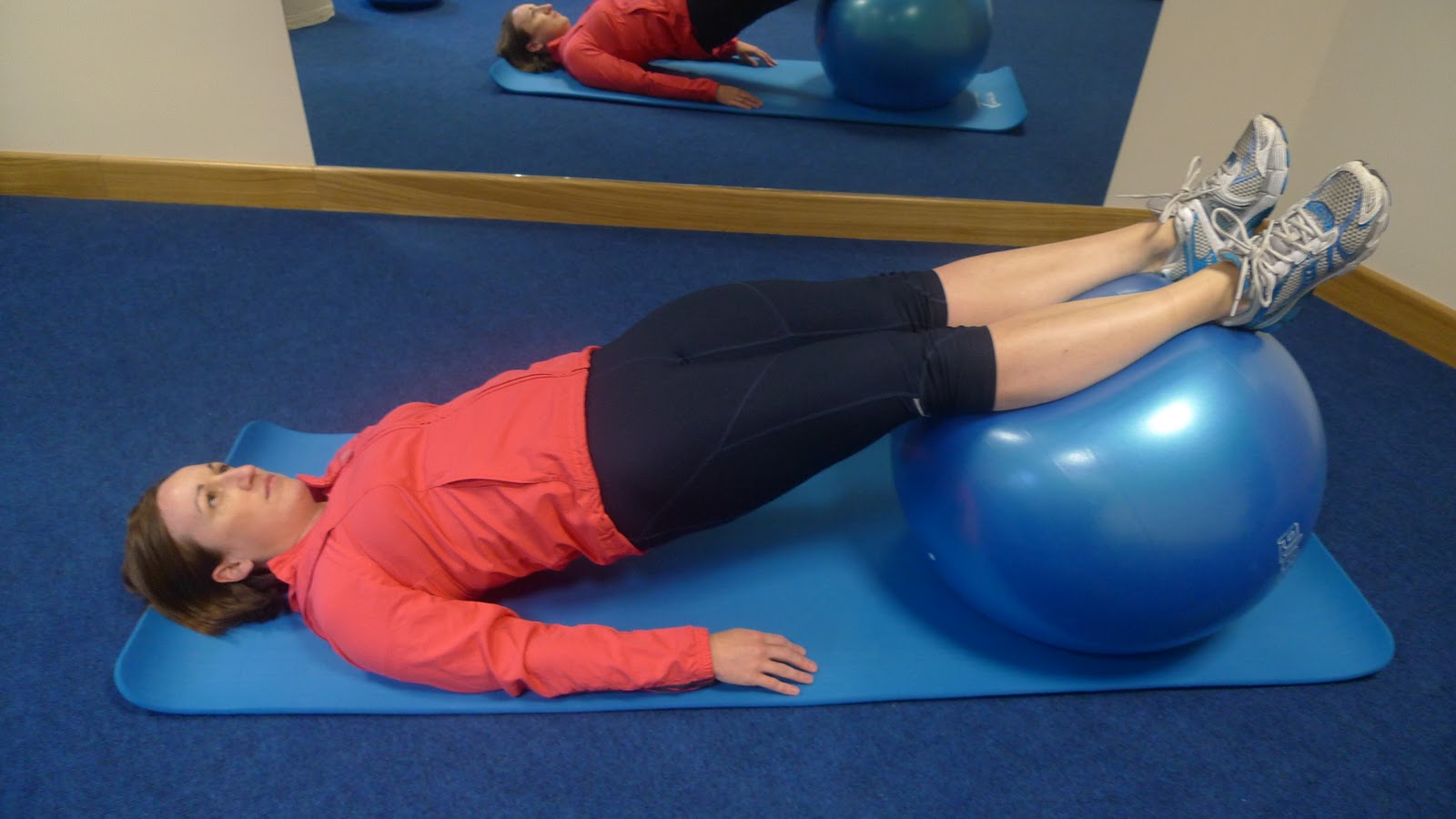
Bridging on Swiss Ball

Bridging on Swiss Ball with leg lift

Clam Stage 1 (gluts)

Clam Stage 2

Clam Stage 3
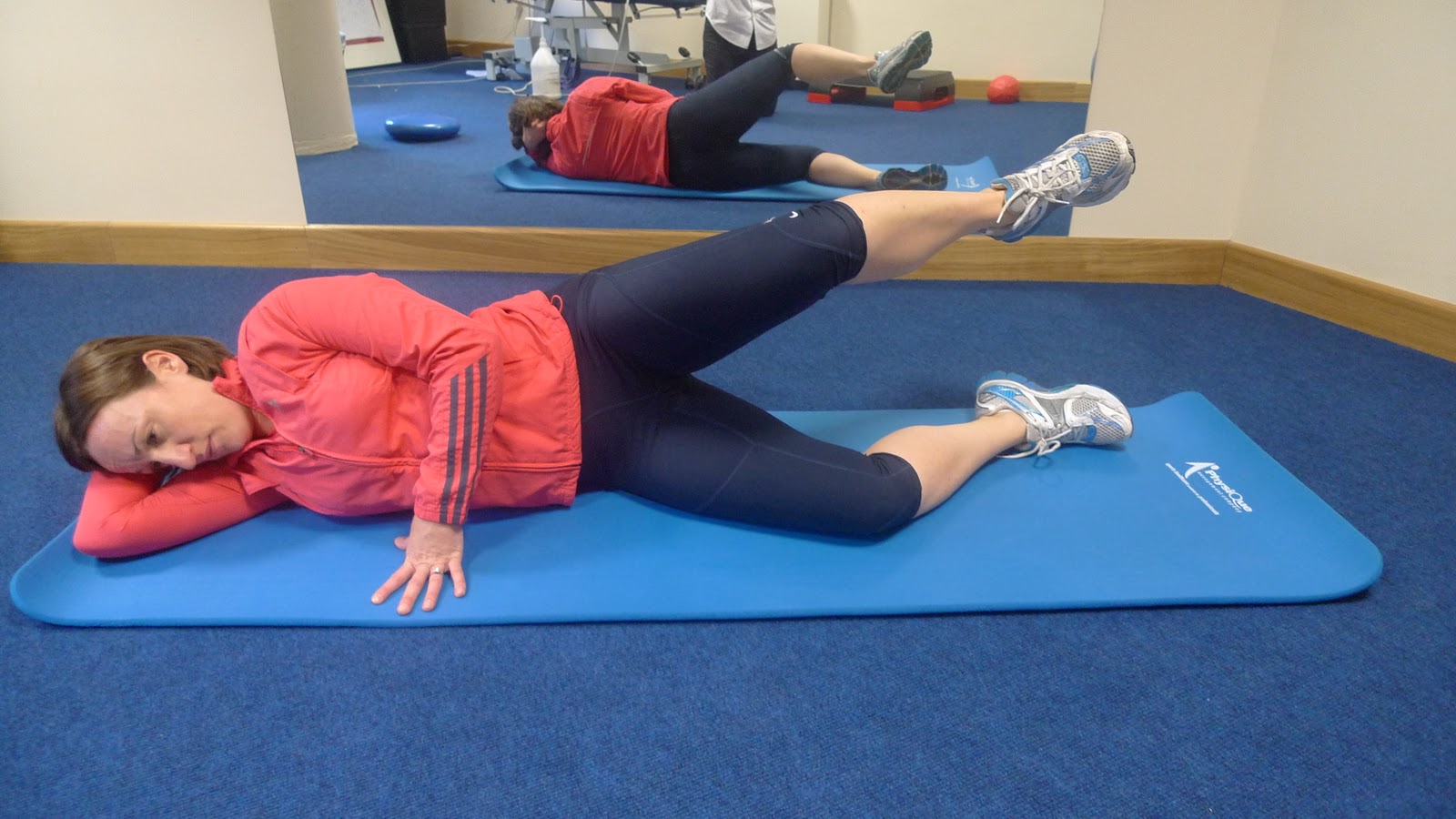
Clam Stage 4

Hamstring curl on ball

Hamstring curl on ball with leg lift

Pelvic control position (neutral)

Plank from knees

Plank from toes

Side plank from knees

Side plank

Superman with leg lift

Superman with arm and leg

Windmill (can be combined with press up)
Any exercise holds an element of risk if undertaken without supervision. These exercises are recommendations only and are performed at your own risk. If you feel any discomfort or pain during exercise, stop immediately
Wednesday, November 10, 2010
Stretches

Gastroc Stretch

Soleus Stretch
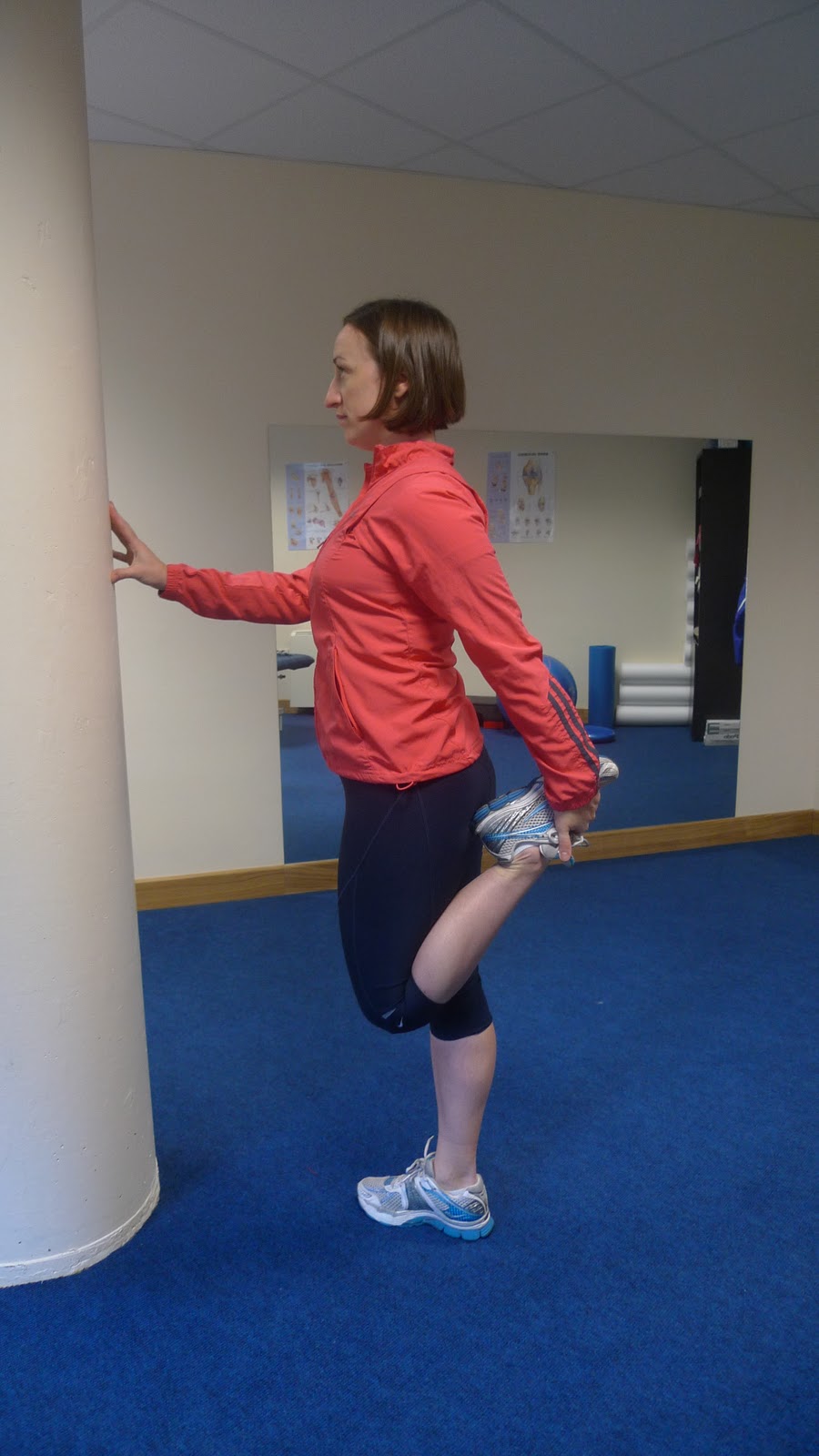
Quad Stretch

Groin stretch

Hamstring stretch

Hip flexor stretch

Hip flexor stretch with arm overhead (increased stretch)

Glut stretch

Piriformis (glut) stretch

Back extension Level 1

Back Extension Level 2

Back extension kneeling

Back flexion kneeling

Back flexion kneeling

Pec stretch

Any exercise holds an element of risk if undertaken without supervision. These exercises are recommendations only and are performed at your own risk. If you feel any discomfort or pain during exercise, stop immediately
Wednesday, October 20, 2010
Zero To Hero
This time of year is very similar to New Years, for people returning to the gym after the Summer months or getting back on the 5-a-side. So we do tend to see an increase in some injuries.
We are all highly motivated when we return to a fitness regime or sport, and tend to throw ourselves into the activity at full steam. We call this going from zero to hero, when people go from doing very little, perhaps over the Summer months and then return to their fitness activity too quickly. It can be the cause of many of the complaints we see in our Physio clinic. The gradual return to activities cannot be overemphasised.
One of the most commonly overlooked areas are the warm-up and the cool down. We may tend to head straight from the office or the car into our fitness regime or sport without allowing our body to gradually warm up. This increases the risk of injuries. The ideal is to warm up with some activity that will increase your body temperature slowly, so jogging is ideal. Active stretches are encouraged for the warm up stage and not long static stretches. Also some agility work or sports specific exercises and drills, are essential for a thorough warm up. It is important to practise common movement patterns and skills which will be used in your sport or activity. This will help improve performance through ensuring the muscles are prepared for the task in hand, it will also improve co-ordination reaction times and accuracy.
The cool down period can often be replaced by a few pints in the bar after a game. This again is essential to reduce your risk of injury and any delayed onset of muscle soreness (DOMS). The cool down should consist of a gentle jog, decreasing in speed down to a walk followed by light static stretching. Remember to stretch all muscle groups used in the sport. Upper body muscles especially are often forgotten is sports such as football, soccer and rugby.
We are all highly motivated when we return to a fitness regime or sport, and tend to throw ourselves into the activity at full steam. We call this going from zero to hero, when people go from doing very little, perhaps over the Summer months and then return to their fitness activity too quickly. It can be the cause of many of the complaints we see in our Physio clinic. The gradual return to activities cannot be overemphasised.
One of the most commonly overlooked areas are the warm-up and the cool down. We may tend to head straight from the office or the car into our fitness regime or sport without allowing our body to gradually warm up. This increases the risk of injuries. The ideal is to warm up with some activity that will increase your body temperature slowly, so jogging is ideal. Active stretches are encouraged for the warm up stage and not long static stretches. Also some agility work or sports specific exercises and drills, are essential for a thorough warm up. It is important to practise common movement patterns and skills which will be used in your sport or activity. This will help improve performance through ensuring the muscles are prepared for the task in hand, it will also improve co-ordination reaction times and accuracy.
The cool down period can often be replaced by a few pints in the bar after a game. This again is essential to reduce your risk of injury and any delayed onset of muscle soreness (DOMS). The cool down should consist of a gentle jog, decreasing in speed down to a walk followed by light static stretching. Remember to stretch all muscle groups used in the sport. Upper body muscles especially are often forgotten is sports such as football, soccer and rugby.
Back to School
September is a busy time for students getting back into school mode. We receive many questions from concerned parents in relation to students carrying very heavy school bags.
There are several common types of school bags available these days. The traditional rucksack remains a good option. The best advice for use of a rucksack, is to use both straps on your shoulders and pull the straps tight, so they are close to the body. The bag can then be better supported by the muscles of your back as the bag is close to the spine.
Another good option is the pull along bags with wheels. These are best for a smaller weight of books as these bags are usually light weight. These bags can easily topple over, and then this can pull the muscles in your arm or shoulder, so be cautious of overloading these bags.
The one strap satchel are best for a lighter load, as there is only one strap to hold the weight of the bag. The best use of the bag is over the body diagonally and not over one shoulder, as this increases the strain through the back and shoulder on that side.
One good tip that applies to each bag, is to actually stack the books with the largest/heaviest book at the back of the bag. Although this does not change the overall weight, the muscles of the back can better manage the load with the heaviest book nearest the spine.
There are several common types of school bags available these days. The traditional rucksack remains a good option. The best advice for use of a rucksack, is to use both straps on your shoulders and pull the straps tight, so they are close to the body. The bag can then be better supported by the muscles of your back as the bag is close to the spine.
Another good option is the pull along bags with wheels. These are best for a smaller weight of books as these bags are usually light weight. These bags can easily topple over, and then this can pull the muscles in your arm or shoulder, so be cautious of overloading these bags.
The one strap satchel are best for a lighter load, as there is only one strap to hold the weight of the bag. The best use of the bag is over the body diagonally and not over one shoulder, as this increases the strain through the back and shoulder on that side.
One good tip that applies to each bag, is to actually stack the books with the largest/heaviest book at the back of the bag. Although this does not change the overall weight, the muscles of the back can better manage the load with the heaviest book nearest the spine.
Subscribe to:
Posts (Atom)